
 99.3% PURITY LOT VL-2689-A
 Kisspeptin
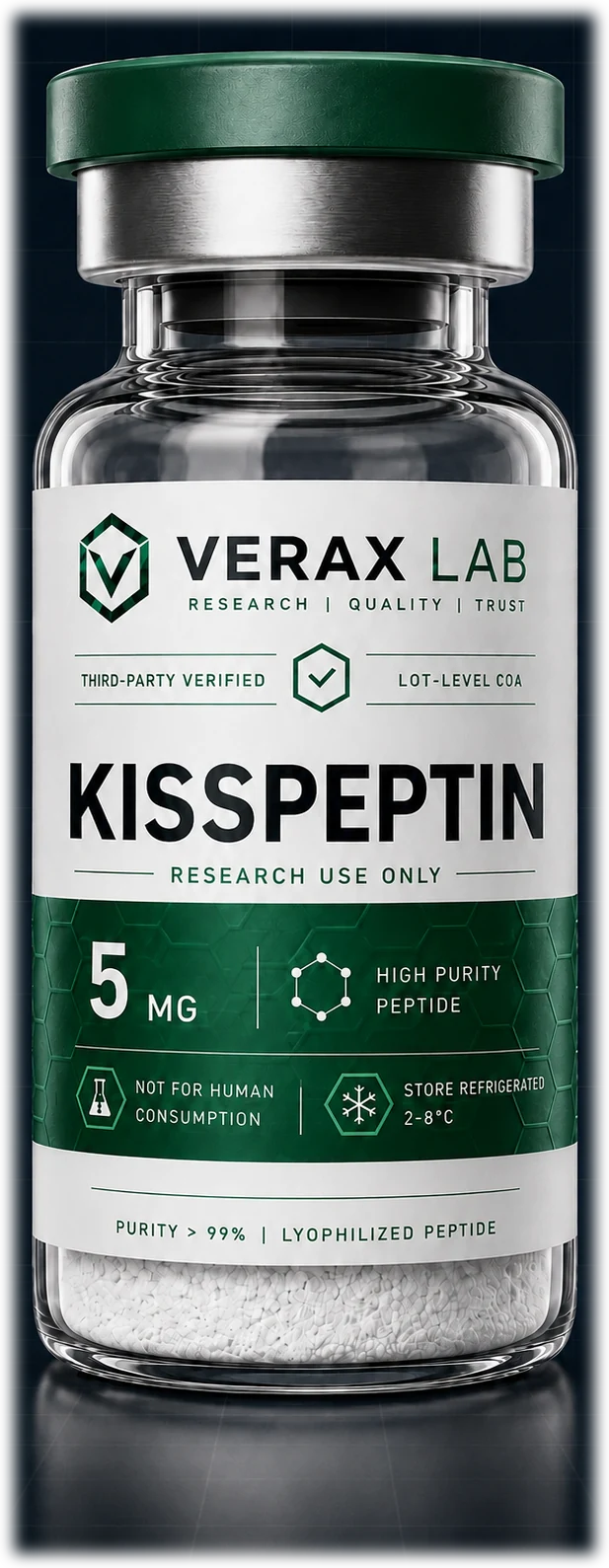
A 10-amino-acid C-terminal fragment of metastin supplied as a 5 mg lyophilized vial for research into KISS1R/GPR54 signaling, GnRH neuronal activity, and the hypothalamic-pituitary-gonadal axis.
- 1 × Kisspeptin 5mg vial
- Tamper-evident flip-off cap
- Batch-tested for purity (≥99%)
- Lyophilized for stability during shipping
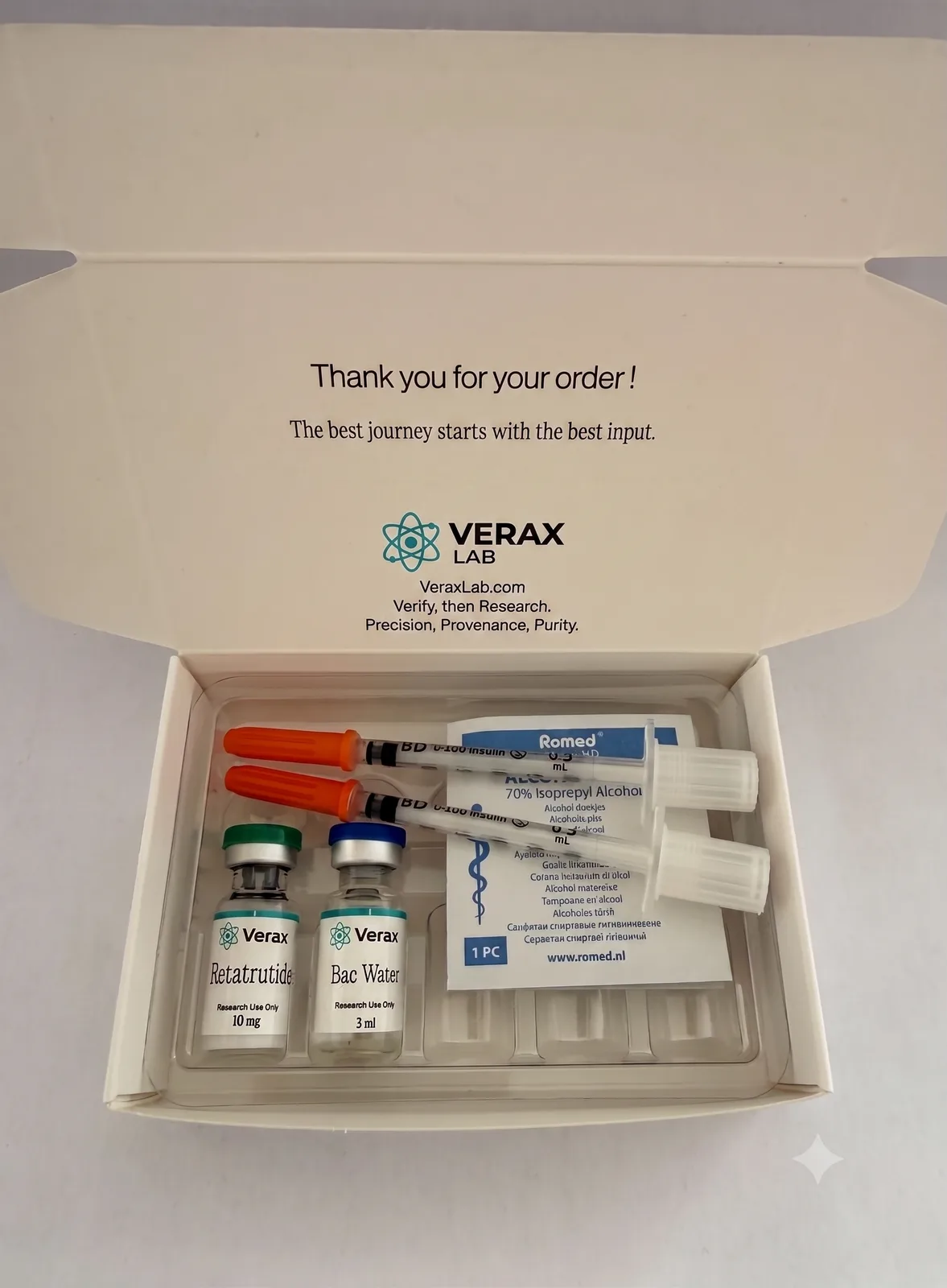
- Bacteriostatic water (3 mL)
About this compound
A 10-amino-acid C-terminal fragment of metastin supplied as a 5 mg lyophilized vial for research into KISS1R/GPR54 signaling, GnRH neuronal activity, and the hypothalamic-pituitary-gonadal axis.
- 5 mg lyophilized peptide per vial
- Kisspeptin-10 (KP-10), metastin(45-54) fragment
- Synthetic peptide, ≥99% purity
- Studied for KISS1R/GPR54 agonism and GnRH signaling
Why the lot matters
- Synthesized and tested per lot, never as a production-run average
- Certificate of Analysis published before the lot goes on sale
- Independent lab, contractually separate from manufacturing
What "research use only" means
This product is sold exclusively for in-vitro laboratory research. It is not evaluated by any medicines agency and is not intended for human or animal administration, diagnosis, treatment, or prevention of disease.
Technical data
Current lot snapshot
Shipping
Reported use in research
Kisspeptin-10 is investigated as the endogenous ligand of the KISS1R/GPR54 receptor and as an upstream regulator of gonadotropin-releasing hormone (GnRH) neuronal signaling. In preclinical models, researchers study how the peptide activates KISS1R on GnRH neurons to modulate the pulsatile release that drives the hypothalamic-pituitary-gonadal axis. Its short decapeptide structure — the C-terminal fragment of metastin (kisspeptin-54) — makes it a common tool for probing receptor binding and downstream Gq/phospholipase-C signaling. Investigators also examine kisspeptin as a research probe for the neuroendocrine control of reproduction and puberty onset in animal models. Work in this area focuses on receptor pharmacology, signal transduction, and the peptide's role in the KISS1/GPR54 pathway.
Reported findings
Research reports that kisspeptin-10 binds KISS1R/GPR54 with high affinity and stimulates GnRH release in animal research models. In preclinical studies, administration has been associated with measurable changes in downstream gonadotropin signaling within the hypothalamic-pituitary-gonadal axis. Investigators note that the peptide's activity is relatively short-lived owing to rapid proteolytic processing of the decapeptide. Comparative research also characterizes differences between kisspeptin-10 and the longer kisspeptin-54 isoform in receptor engagement and signaling duration. These observations remain confined to laboratory and animal research contexts.
Handling & safety
The safety profile of kisspeptin-10 has not been completely characterized and it should be handled only by qualified personnel using appropriate laboratory controls. Standard precautions for handling lyophilized peptides — including protective equipment and avoidance of inhalation or contact — apply. This material is supplied strictly for in-vitro and preclinical research and is not for human or veterinary use. Consult the applicable safety data before handling.
Reconstitution
Recommended ratio
- 0.5 mL of bacteriostatic water per 5 mg vial
- Equivalent to 10 mg/mL (i.e. 1 mg per 10 units on a 100 U insulin syringe)
- Remove the plastic flip-off lid from the vial.
- Disinfect the rubber stoppers with alcohol wipes.
- Inject the diluent slowly down the inner wall of the vial to avoid foaming.
- Gently swirl the vial (never shake). Let it dissolve for about 10 minutes.
Storage
Unopened / before reconstitution
- Store at a stable temperature.
- Stable for 24 months.
- For long-term storage (2+ years), store at -20 °C.
Reconstituted solution
- Must be kept refrigerated.
- Avoid exposure to light and excessive heat.
3RD-PARTY LAB
| Parameter | Method | Result | Status |
|---|---|---|---|
| Identity confirmation | Mass spectrometry | Consistent with 1302.4 g/mol | PASS |
| Purity | HPLC (area %) | 99.3% | PASS |
| Net peptide content | Gravimetric | 4.99 mg | PASS |
| Appearance | Visual | White to off-white lyophilized powder | PASS |
| Residual solvents | GC headspace | Within limits | PASS |
| Microbial screening | Sterility panel | No growth detected | PASS |
3RD-PARTY LAB
| Parameter | Method | Result | Status |
|---|---|---|---|
| Identity confirmation | Mass spectrometry | Consistent with 1302.4 g/mol | PASS |
| Purity | HPLC (area %) | 99.2% | PASS |
| Net peptide content | Gravimetric | 4.98 mg | PASS |
| Appearance | Visual | White to off-white lyophilized powder | PASS |
| Residual solvents | GC headspace | Within limits | PASS |
| Microbial screening | Sterility panel | No growth detected | PASS |
| Lot | Filled | Purity | Report | Status | |
|---|---|---|---|---|---|
| VL-2689-A | Jul 2026 | 99.3% | TR-88401 | Active | |
| VL-2670-B | May 2026 | 99.2% | TR-88316 | Sold out |