 99.3% PURITY LOT VL-2705-A
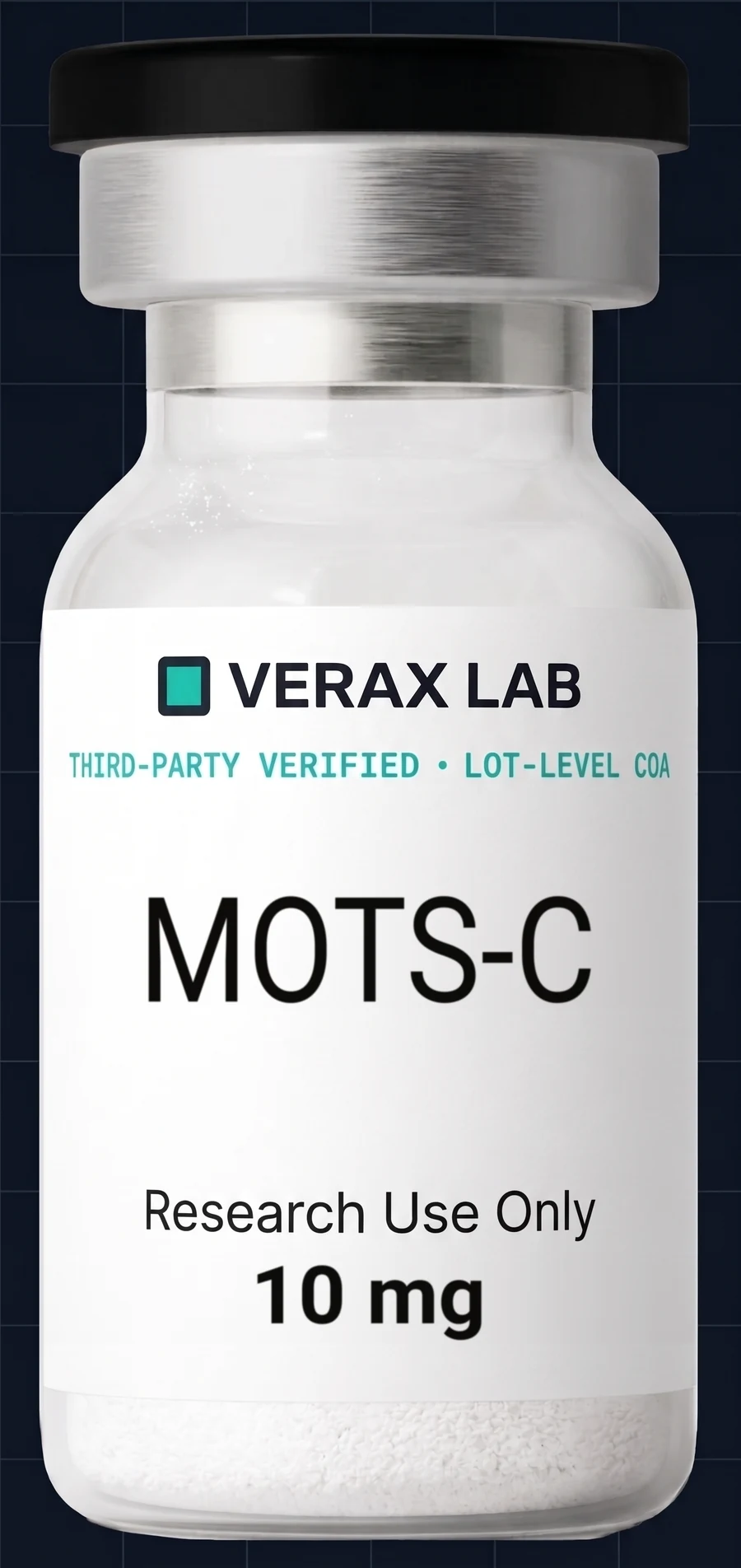
 MOTS-C
A mitochondrial-derived peptide supplied as a 10 mg lyophilized vial for research into AMPK activation, metabolic homeostasis, and insulin sensitivity.
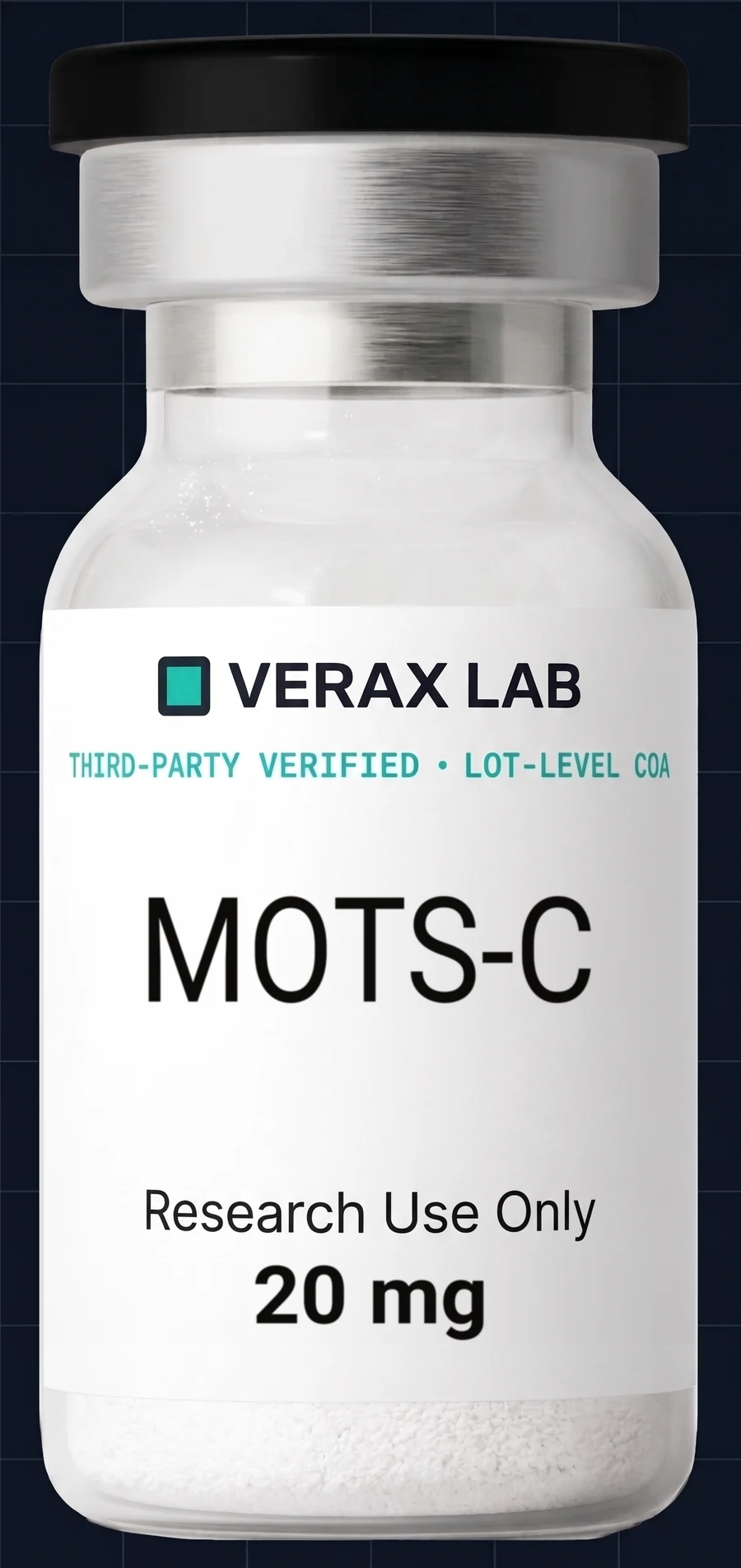
A mitochondrial-derived peptide supplied as a 20 mg lyophilized vial for research into AMPK activation, metabolic homeostasis, and insulin sensitivity.
- 1 × MOTS-C 10mg vial
- Tamper-evident flip-off cap
- Batch-tested for purity (≥99%)
- Lyophilized for stability during shipping
- Bacteriostatic water (3 mL)
- 1 × MOTS-C 20mg vial
- Tamper-evident flip-off cap
- Batch-tested for purity (≥99%)
- Lyophilized for stability during shipping
- Bacteriostatic water (3 mL)
🎁 Bacteriostatic Water offert (valeur $14.00) ajouté automatiquement à votre commande
About this compound
A mitochondrial-derived peptide supplied as a 10 mg lyophilized vial for research into AMPK activation, metabolic homeostasis, and insulin sensitivity.
- 10 mg lyophilized peptide per vial
- Mitochondrial-derived peptide (16 amino acids)
- Synthetic peptide, ≥99% purity
- Studied for AMPK activation and metabolic homeostasis
A mitochondrial-derived peptide supplied as a 20 mg lyophilized vial for research into AMPK activation, metabolic homeostasis, and insulin sensitivity.
- 20 mg lyophilized peptide per vial
- Mitochondrial-derived peptide (16 amino acids)
- Synthetic peptide, ≥99% purity
- Studied for AMPK activation and metabolic homeostasis
Why the lot matters
- Synthesized and tested per lot, never as a production-run average
- Certificate of Analysis published before the lot goes on sale
- Independent lab, contractually separate from manufacturing
What "research use only" means
This product is sold exclusively for in-vitro laboratory research. It is not evaluated by any medicines agency and is not intended for human or animal administration, diagnosis, treatment, or prevention of disease.
Technical data
Technical data
Current lot snapshot
Shipping
Reported use in research
MOTS-c is a mitochondrial-derived peptide of 16 amino acids encoded within the mitochondrial 12S rRNA region. In preclinical research models it is studied as a regulator of cellular energy metabolism and is reported to translocate to the nucleus under metabolic stress to influence gene expression. Research indicates that MOTS-c is associated with activation of the AMPK pathway, a central sensor of cellular energy balance. It is investigated as a potential modulator of metabolic homeostasis and insulin sensitivity in laboratory settings.
Reported findings
Research reports that MOTS-c activates the AMPK signaling pathway and modulates metabolic flux in animal and cellular research models. Preclinical studies have investigated its association with glucose regulation, enhanced insulin sensitivity, and resistance to diet-induced metabolic changes in rodent models. It has also been studied for its reported influence on exercise capacity and cellular stress responses. These properties have positioned MOTS-c as a subject of interest in metabolic and cellular-energy research models.
Handling & safety
The safety profile of MOTS-c has not been fully characterized in research models, and its long-term effects remain under investigation. It is intended strictly for in-vitro and laboratory research and should be handled only by qualified personnel using appropriate protective equipment. As with all research peptides, it must be kept away from any human or veterinary exposure. No safety conclusions for non-research applications should be drawn from the available data.
Reconstitution
Recommended ratio
- 1 mL of bacteriostatic water per 10 mg vial
- Equivalent to 10 mg/mL (i.e. 1 mg per 10 units on a 100 U insulin syringe)
- Remove the plastic flip-off lid from the vial.
- Disinfect the rubber stoppers with alcohol wipes.
- Inject the diluent slowly down the inner wall of the vial to avoid foaming.
- Gently swirl the vial (never shake). Let it dissolve for about 10 minutes.
Storage
Unopened / before reconstitution
- Store at a stable temperature.
- Stable for 24 months.
- For long-term storage (2+ years), store at -20 °C.
Reconstituted solution
- Must be kept refrigerated.
- Avoid exposure to light and excessive heat.
3RD-PARTY LAB
| Parameter | Method | Result | Status |
|---|---|---|---|
| Identity confirmation | Mass spectrometry | Consistent with 2174.6 g/mol | PASS |
| Purity | HPLC (area %) | 99.3% | PASS |
| Net peptide content | Gravimetric | 9.99 mg | PASS |
| Appearance | Visual | White to off-white lyophilized powder | PASS |
| Residual solvents | GC headspace | Within limits | PASS |
| Microbial screening | Sterility panel | No growth detected | PASS |
3RD-PARTY LAB
| Parameter | Method | Result | Status |
|---|---|---|---|
| Identity confirmation | Mass spectrometry | Consistent with 2174.6 g/mol | PASS |
| Purity | HPLC (area %) | 99.2% | PASS |
| Net peptide content | Gravimetric | 10.02 mg | PASS |
| Appearance | Visual | White to off-white lyophilized powder | PASS |
| Residual solvents | GC headspace | Within limits | PASS |
| Microbial screening | Sterility panel | No growth detected | PASS |
3RD-PARTY LAB
| Parameter | Method | Result | Status |
|---|---|---|---|
| Identity confirmation | Mass spectrometry | Consistent with 2174.6 g/mol | PASS |
| Purity | HPLC (area %) | 99.1% | PASS |
| Net peptide content | Gravimetric | 10.03 mg | PASS |
| Appearance | Visual | White to off-white lyophilized powder | PASS |
| Residual solvents | GC headspace | Within limits | PASS |
| Microbial screening | Sterility panel | No growth detected | PASS |
3RD-PARTY LAB
| Parameter | Method | Result | Status |
|---|---|---|---|
| Identity confirmation | Mass spectrometry | Consistent with 2174.6 g/mol | PASS |
| Purity | HPLC (area %) | 99.6% | PASS |
| Net peptide content | Gravimetric | 20.04 mg | PASS |
| Appearance | Visual | White to off-white lyophilized powder | PASS |
| Residual solvents | GC headspace | Within limits | PASS |
| Microbial screening | Sterility panel | No growth detected | PASS |
3RD-PARTY LAB
| Parameter | Method | Result | Status |
|---|---|---|---|
| Identity confirmation | Mass spectrometry | Consistent with 2174.6 g/mol | PASS |
| Purity | HPLC (area %) | 99.7% | PASS |
| Net peptide content | Gravimetric | 20.02 mg | PASS |
| Appearance | Visual | White to off-white lyophilized powder | PASS |
| Residual solvents | GC headspace | Within limits | PASS |
| Microbial screening | Sterility panel | No growth detected | PASS |
| Lot | Filled | Purity | Report | Status | |
|---|---|---|---|---|---|
| VL-2705-A | Jul 2026 | 99.3% | TR-88769 | Active | |
| VL-2686-B | May 2026 | 99.2% | TR-88780 | Sold out | |
| VL-2667-C | Mar 2026 | 99.1% | TR-88771 | Sold out |
| Lot | Filled | Purity | Report | Status | |
|---|---|---|---|---|---|
| VL-2642-A | Jul 2026 | 99.6% | TR-88424 | Active | |
| VL-2661-B | May 2026 | 99.7% | TR-88509 | Sold out |